
seed phrase
Access to crypto-native companies and assets building the new infrastructure for money, markets, and AI.
Introducing Seed Phrase Fund.
Seed Phrase Fund is an operator-led investment vehicle providing direct exposure to the crypto-native companies, networks, and digital assets building programmable markets.
The fund is designed for investors who want access to opportunities that typically only sustained operator-level work inside the ecosystem can surface and capture.
The core insight.
Crypto is the new infrastructure for money, markets, coordination, and AI.
For decades, money and markets relied on gatekeepers: banks, brokers, exchanges, payment networks, custodians, clearinghouses, and institutions that controlled access, extracted fees, and imposed constraints. Crypto replaces those gatekeepers with programmable rails.
Open instead of closed. Global instead of local. Continuous instead of periodic. Programmable instead of static.
This is not one trend. It is a stack-wide migration. Stablecoins are turning dollars into internet-native money. Crypto cards are making on-chain balances spendable in the real world. On-chain exchanges are rebuilding market structure. Tokenized assets are turning financial instruments into programmable objects. Privacy assets are restoring confidentiality to digital finance. Prediction markets are making outcomes tradable. Governance markets are making decisions priceable. Decentralized science networks are experimenting with open scientific incentives. AI agents are beginning to move value on crypto rails.
The pattern is consistent: gatekeepers are removed, processes are automated, and systems become global, continuous, and programmable.
Stablecoin supply has crossed $320B, roughly double its level 24 months ago,[1] and is settling trillions in annual volume across trading, payments, remittances, payroll, treasury, and cross-border commerce. Over the trailing twelve months, stablecoin rails moved $98.9T, roughly four times the combined annual volume of Visa and Mastercard ($25T).[2][3] Monthly active stablecoin addresses exceed 47M and continue to grow.[4] Global crypto holders number more than 700M, roughly one in eleven humans.[5] Stablecoins move like software: instantly, globally, and continuously. Crypto cards extend that utility into daily life by making on-chain dollars spendable through existing merchant networks.
Financial markets are moving on-chain for the same reason. Crypto-native venues operate 24/7, settle instantly, and are globally accessible by default. They compress functions fragmented across traditional finance (exchange, clearing, settlement, collateral, custody, and liquidity) into software.
Tokenization expands this beyond crypto-native assets. Stocks, treasuries, private-market exposure, real-world yield, and other instruments are moving from static entries in brokerage or custodian databases into programmable objects. BCG projects $16T tokenized by 2030.[6] Once tokenized, assets can be transferred globally, used as collateral, integrated into wallets, traded on-chain, routed through DeFi, and combined into automated strategies.
Privacy restores a core property of serious financial activity: confidentiality. Public blockchains make activity visible by default, which is powerful for auditability, but serious digital finance also requires selective disclosure. Individuals, companies, funds, and autonomous agents need to transact, hold balances, manage positions, and coordinate economically without exposing every action to the public internet. Privacy is not a niche feature. It is a requirement for money in a digital economy.
Crypto is also rebuilding speculation, information, and decision-making. Speculative markets can now be created instantly, globally, and with built-in liquidity. Real-world outcomes can become tradable probabilities. Governance can move from static voting to decision markets where capital prices the expected value of outcomes.
Science and AI are moving in the same direction. Scientific contribution can be coordinated through open incentives instead of only through institutional funding, journals, and reputation systems. AI production can be organized through market-based networks, and AI agents can use wallets, stablecoins, smart contracts, and markets to operate economically.
Crypto is not disrupting one industry. It is replacing core functions across multiple trillion-dollar systems on a unified software stack.
The opportunity is not broad exposure to "crypto." It is targeted exposure to the assets and teams turning money movement, market access, payments, brokerage, governance, AI coordination, scientific funding, and privacy into programmable markets.
The strongest crypto projects are no longer narrative-driven tokens. They are operating companies, exchanges, networks, and coordination systems with users, revenue, liquidity, integrations, distribution, and expanding product surfaces:
Tether has become one of the most profitable financial businesses in the world with a fraction of the headcount of a traditional bank. With roughly 300 employees,[7] $192B in assets, and $141B in US Treasuries (one of the largest Treasury holders in the world),[8] USDT issuer Tether earns on the order of $5B a year in recurring operating profit from Treasury yield alone, more than $16M of profit per employee.[9] In 2025, gains on its gold and bitcoin reserves pushed total net profit past $10B.[8]
Hyperliquid is proving that exchanges can be rebuilt as ultra-lean, crypto-native software companies. The protocol has cleared trillions in cumulative volume in perpetual futures, crypto's most traded instrument, supports billions in open interest, and generates hundreds of millions in annualized revenue with a team reportedly around a dozen people and no outside funding.[10][11]
Pump.fun turned token creation into a viral consumer financial product. Within roughly two years of launch, it crossed $1B in lifetime revenue, minted millions of tokens, reached tens of millions of wallets, and completed a $600M public sale in 12 minutes.[12][13]
KAST is turning stablecoins into a global current account. Its wallet and card stack gives users dollar-denominated accounts and spending access across merchant networks in 170+ countries, translating on-chain dollars into daily payment utility.[14][15]
TradeXYZ is moving traditional market exposure onto 24/7 crypto rails. It has cleared $100B+ in cumulative perpetuals volume across equities, indices, ETFs, and commodities, and became the first venue licensed by S&P Dow Jones Indices to offer an S&P 500 perpetual.[16][17]
xStocks is making tokenized equities liquid, portable, and crypto-native. Since launching in 2025, it has scaled to $25B+ in transaction volume across 100 tokenized stocks and ETFs, with distribution through major exchanges, wallets, and DeFi venues.[18][19]
Polymarket showed that prediction markets can outperform traditional polling and become mainstream information infrastructure. It settled billions in 2024 US election volume, priced Trump as the favorite while major polling models still favored Harris, and academic research found Polymarket outperformed traditional polling in the 2024 election cycle.[20][21] In October 2025, Intercontinental Exchange, owner of the New York Stock Exchange, invested up to $2B in Polymarket at an $8B valuation.[22]
MetaDAO is turning governance from voting into price discovery. Its futarchy model lets markets decide whether proposals pass by pricing the expected value of "pass" versus "fail" outcomes, with live usage across organizations including Drift, Jito, Sanctum, Marinade, and ORE.[23][24]
Bittensor is turning AI production into a market-allocated network. The network allocates token incentives across active subnets performing AI workloads such as inference, training, compute, storage, and model evaluation, creating a crypto-native market for machine intelligence.[25][26]
ResearchCoin is turning scientific contribution into an incentive market. ResearchHub uses RSC to reward peer review, discussion, curation, bounties, and research funding proposals, applying token incentives to a scientific system still largely dependent on unpaid review labor and institutional gatekeeping.[27][28]
Zcash is making private money investable again. As more value moves on-chain, Zcash represents the return of cash-like confidentiality: a liquid, decentralized privacy asset built around shielded payments and selective disclosure.[29][30]
These are not isolated examples. They are proof that crypto-native teams are building real companies, exchanges, markets, and networks with startup speed, software margins, global reach, and market-native liquidity.
Portfolio focus.
The investment case is that the winners are now competing directly with legacy systems measured in trillions of dollars: money movement, payments, exchanges, brokerage, private markets, equity rails, prediction markets, governance, scientific funding, AI, and privacy.
The fund allocates positions across the operators, networks, and assets driving the infrastructure of programmable markets. The portfolio is actively managed across infrastructure assets, breakout tokens, stablecoin yield, liquidity provision, automated vaults, staking, and tokenized assets. Positions are reweighted as theses mature, valuations move, and new operators emerge.
The fund holds Bitcoin as a portfolio anchor, sized conservatively and held alongside the largest institutional Bitcoin holders on Earth: BlackRock (IBIT, the fastest-growing ETF in history), Fidelity (FBTC), the US Strategic Bitcoin Reserve, Tesla, SpaceX, Block, and sovereign wealth funds.[31]
The ambition.
The fund's long-term goal is to become the vehicle through which investors gain exposure to the crypto-native companies, networks, and assets rebuilding the infrastructure of money, markets, and AI.
The migration is already happening. Stablecoins are settling more value than the world's largest card networks. Tokenized assets are scaling into the trillions. Crypto-native operating companies are producing software-margin economics with global reach and double-digit headcount. The question for an investor is not whether the migration occurs. The question is which companies and assets capture it, and how that exposure is constructed, rotated, and operated.
partners
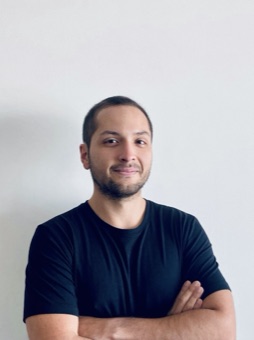

Seed Phrase Fund is run by its two partners, Diego Bartra and Ragi Burhum, operators in crypto with the majority of their own net worth tied to crypto, directly or indirectly, and invested much the way the fund invests.
contact
For allocation inquiries: [email protected]